
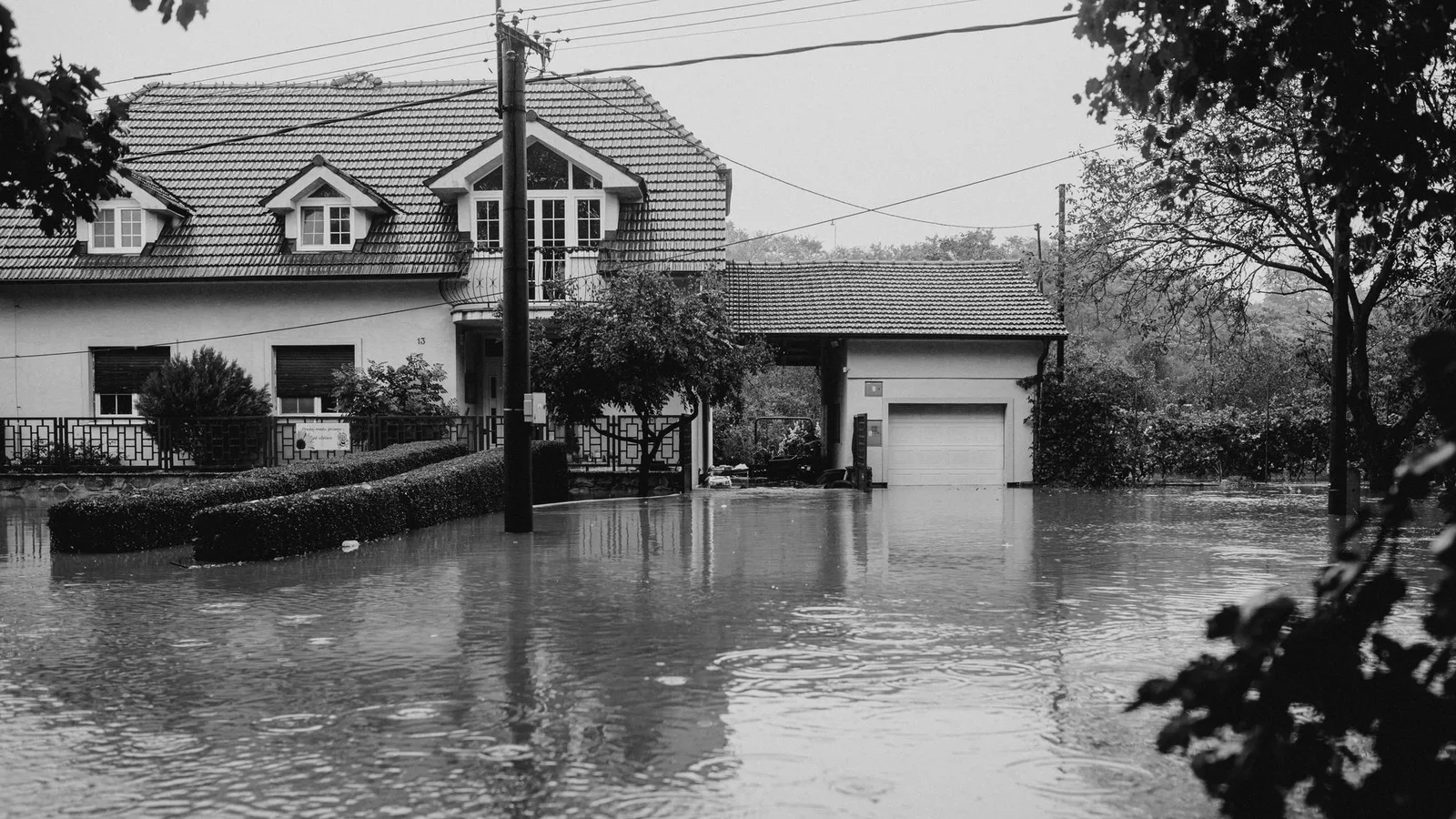
Flood cleanup in Sacramento, CA
Flood cleanup in Sacramento, CA is the work after water comes in from outside: a creek over its banks, storm runoff through a garage door or a levee seep. Floodwater is treated as contaminated, so flood damage cleanup removes soaked porous materials, cleans and disinfects what stays, and dries the structure before anything is rebuilt.
How is flood cleanup different from a plumbing leak?
A burst supply line releases clean water from inside the house. Floodwater crosses streets, yards and sometimes sewers before it reaches you. The CDC warns that a flooded home may be contaminated with sewage and mold, so materials that soaked up floodwater are handled as contaminated. In practice that means:
- Carpet, pad, upholstered furniture, mattresses, wet insulation and the lower part of drywall are generally removed and discarded, not dried in place.
- Hard, nonporous surfaces such as tile, sealed concrete, metal and many cabinet frames are cleaned and disinfected.
- Crews wear protective gear and keep the work area separated from clean parts of the house.
- Drying starts only after the contaminated materials and mud are out.
What does a flood cleanup job involve, step by step?
- Safety check. Power is shut off from a dry location, or by an electrician if reaching the panel means standing in water. Gas leaks mean leaving immediately.
- Water and mud removal. Pumps remove standing water; silt and debris are shoveled and squeegeed out.
- Tear out. Wet porous materials are cut out, usually with a flood cut on walls above the water line.
- Cleaning and disinfection of framing, slab and remaining surfaces.
- Drying and verification with dehumidifiers, air movers and moisture readings; see structural drying.
- Documentation of every room for the flood claim.
Where does flooding happen around Sacramento?
The U.S. Army Corps of Engineers describes the Sacramento area as one of the most flood at risk metropolitan areas in the country, protected by a system of levees, weirs, bypasses and Folsom Dam. Most homes never see river flooding, but local creek and storm flooding is more common than many owners expect:
- In the storms of late December 2022 and early January 2023, the NOAA California Nevada River Forecast Center recorded levee breaks on the Cosumnes River and the closure of State Route 99 in southern Sacramento County; see our Elk Grove page for Laguna Creek.
- Sacramento County tracks repetitive loss areas where homes have filed repeated flood claims, including several along creeks and sloughs in Carmichael.
- In Placer County, ravines carry large storm flows; a county water resources chapter estimates Auburn Ravine’s 100 year flow at more than 17,000 cubic feet per second as it passes Lincoln.
- Low basins protected by levees, such as Natomas, depend on those levees holding.
Look up your own address on the FEMA Flood Map Service Center. California’s Department of Water Resources also publishes Best Available Maps showing 100, 200 and 500 year floodplains, which can flag risk FEMA maps do not.
What should you do when floodwater gets in?
- Stay out of standing water if the power is on. The CDC says never to switch power on or off while standing in water.
- Run generators and gasoline pumps outdoors, at least 20 feet from doors, windows and vents, to avoid carbon monoxide poisoning.
- Wear rubber boots and gloves, and wash hands after any contact with floodwater.
- Throw away food that touched floodwater. If you are on a private well, have the water tested before drinking it.
- If the house was closed up for days, the CDC advises assuming there is mold and airing it out before staying inside.
- Photograph water lines on walls and every damaged item before removal.
Is flood damage covered by homeowners insurance?
Generally not. The California Department of Insurance states that homeowners policies do not cover flood damage, and flood insurance is a separate policy. Through the National Flood Insurance Program, a single family home can carry up to $250,000 of building coverage and up to $100,000 for contents, and renters can buy contents coverage. New policies generally take effect after 30 days, so buy before the storm season. A flood claim is filed with the flood insurer, with photos, an itemized list of damaged property and the cleanup records. See insurance claims help.
What should you keep and what should you throw out after a flood?
- Food: the CDC says to throw away food that may have touched flood or storm water, perishable food that lost refrigeration, and anything with an unusual odor, color or texture. When in doubt, throw it out.
- Mattresses, pillows, upholstered furniture and stuffed toys soaked by floodwater are generally discarded.
- Carpet, pad and wet drywall and insulation are removed.
- Solid wood, metal, glass and hard plastic can usually be cleaned and disinfected.
- Clothing and fabrics may be washed if the label allows hot water; heavily soiled items are often not worth saving.
- Important papers and photos can sometimes be frozen to stop mold until they can be dried or restored.
Before anything leaves the house, photograph it and list it. Flood insurers usually want an itemized inventory, and the items themselves may need to be kept until the adjuster sees them.
How do you protect a home before the next storm?
- Check your flood zone and your flood policy before winter, since new policies generally need 30 days to take effect.
- Clean gutters and make sure downspouts and yard grading carry water away from the foundation, as the CDC recommends to keep crawlspaces and basements dry.
- Keep storm drain inlets near your driveway clear of leaves.
- Move valuables, documents and electronics off garage and ground floor floors during storm season.
- Know how to shut off electricity, gas and water, and keep a battery flashlight where you can find it.
- If you are on a private well, plan to test the water after any flood before drinking it.
Flood cleanup: common questions
Can flooded carpet be cleaned and kept?
Generally no. Carpet and pad soaked by floodwater are treated as contaminated and are usually removed and discarded, along with other porous items that soaked it up.
Is it safe to go back into my flooded house?
Only after the power is off or confirmed safe and there is no gas smell. The CDC also advises airing out a house closed up for days and assuming mold may be present.
Does homeowners insurance pay for flood cleanup?
Standard homeowners policies exclude flood. Flood damage is claimed on a separate flood policy, such as one through the National Flood Insurance Program.
How much does NFIP flood insurance cover?
For a single family home, up to $250,000 for the building and up to $100,000 for contents. Policies generally have a 30 day waiting period.
How do I know if my Sacramento area home is in a floodplain?
Check your address on the FEMA Flood Map Service Center and on California DWR's Best Available Maps, which also show 200 year floodplains.
Related services
Related reading
- Sacramento, CA Winter Storm and Flood Prep: A Homeowner’s Checklist
- Water Damage Categories 1, 2 and 3 Explained
Where is flood cleanup in Sacramento, CA available?
Serving 24 communities across Sacramento, CA and surrounding areas.
Find your city to read local flood history, climate and housing context, then call. Select Map on any card to open it in Google Maps.
Skip the map and go to the city list- Sacramento, CASacramento CountyMap
- Elk Grove, CASacramento CountyMap
- Roseville, CAPlacer CountyMap
- Folsom, CASacramento CountyMap
- Rancho Cordova, CASacramento CountyMap
- Citrus Heights, CASacramento CountyMap
- Carmichael, CASacramento CountyMap
- Davis, CAYolo CountyMap
- West Sacramento, CAYolo CountyMap
- Natomas, CASacramento CountyMap
- Arden-Arcade, CASacramento CountyMap
- Orangevale, CASacramento CountyMap
- Fair Oaks, CASacramento CountyMap
- Lincoln, CAPlacer CountyMap
- Rocklin, CAPlacer CountyMap
- Galt, CASacramento CountyMap
- Woodland, CAYolo CountyMap
- Auburn, CAPlacer CountyMap
- Antelope, CASacramento CountyMap
- Rio Linda, CASacramento CountyMap
- Gold River, CASacramento CountyMap
- Loomis, CAPlacer CountyMap
- Granite Bay, CAPlacer CountyMap
- North Highlands, CASacramento CountyMap